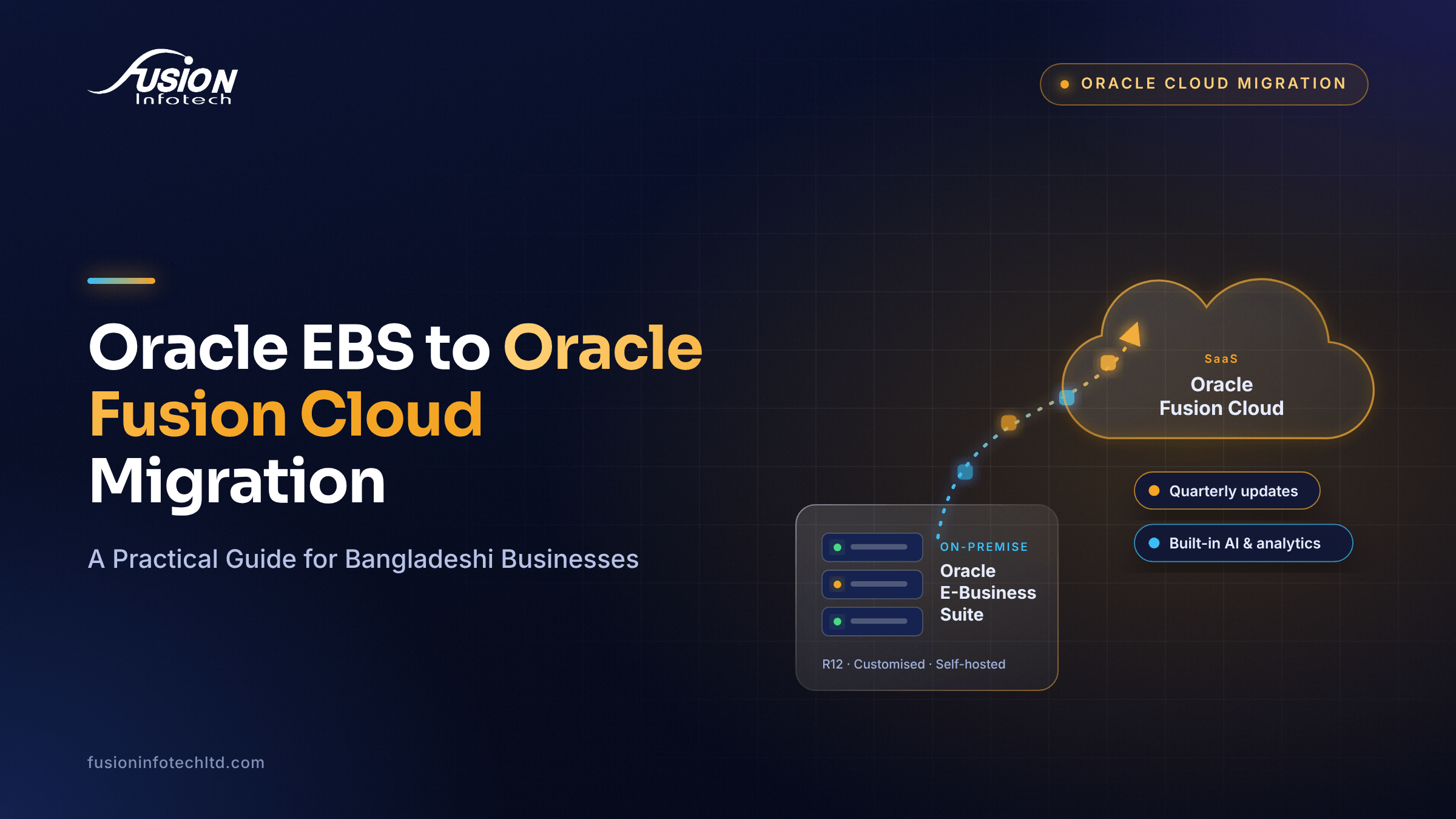
For companies still running on Oracle E-Business Suite, the question has almost certainly surfaced in a boardroom by now: "Should we move to the cloud?"
The candid answer is that it depends. Some organizations should start planning immediately; others can comfortably wait several years. This guide is designed to help businesses determine which camp they fall into, and to set out what an Oracle EBS to cloud migration actually entails.
Not necessarily. Oracle has extended support for EBS 12.2 year after year, and recent reports indicate coverage through at least 2036 or 2037. Because Oracle reviews that date annually, however, decision-makers should consult Oracle's official support policy before committing to any course of action.
The picture is different for businesses still on EBS 12.1. Oracle's premier support for that version has already ended, making a near-term upgrade or migration the prudent course.
There is a further strategic consideration. Oracle is channeling its new features and AI capabilities into Oracle Fusion Cloud ERP, not into EBS. EBS will continue to function, but it is unlikely to evolve significantly. For a refresher on what the current platform offers, see our article on Oracle EBS in Bangladesh. And for insight into why so many companies remain satisfied with it, read how Oracle EBS helps save costs.
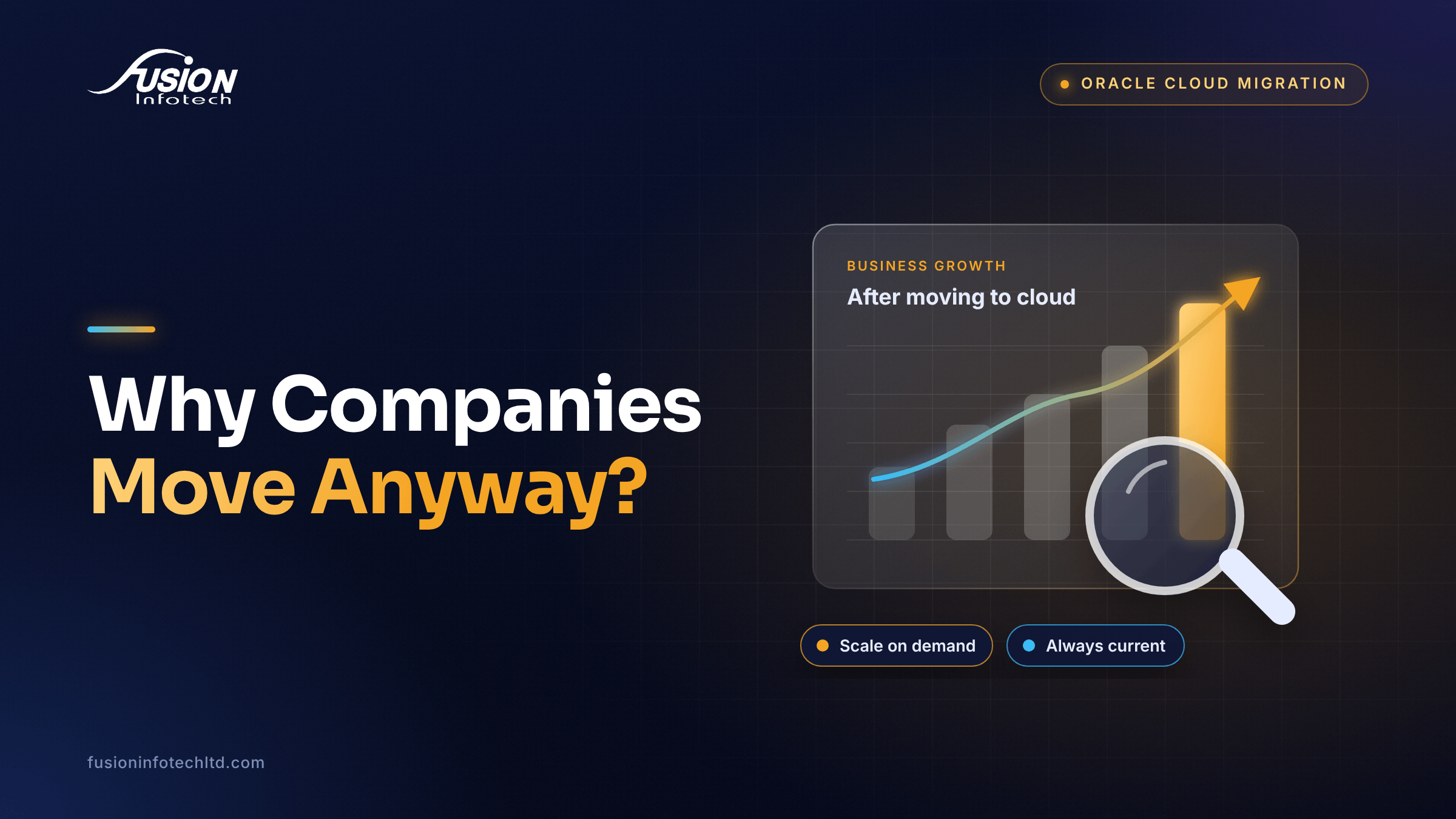
These are the motivations we encounter most frequently:
- The month-end close drags on, with much of the work still done in Excel.
- Patches and upgrades consume the IT team's capacity year-round.
- Managers want to review figures on their phones rather than wait for an emailed report.
- Leadership wants smarter forecasting and faster invoice processing without building those capabilities in-house. This article explains
-The business is expanding, and on-premise servers are becoming harder to maintain. We examined this in Cloud ERP for scalability and flexibility.
"Moving to the cloud" can describe two very different undertakings, and conflating them is a point where many projects fail. There are four common approaches.
The first option is the most frequently misunderstood. Rehosting EBS on Oracle's cloud resolves infrastructure issues, but the business is still running the same legacy application. If Fusion is the ultimate objective, a full Fusion project will still be required down the line.
1. Take stock of what you have
Begin with a complete inventory of modules, customizations and reports. Most organizations discover several that have gone unused for years; those should be left behind. Fusion performs best with standard processes, so every customization should earn its place in the new system.
2. Clean up your data
This is the stage that catches most businesses off guard. There is no need to carry every historical transaction into the new platform. Most companies migrate core records, such as customers, suppliers, items and the chart of accounts, along with open balances, while historical data is retained in an archive. Clean data makes Oracle Cloud migration faster and considerably less disruptive.
3. Set up and test
The implementation team configures Fusion, after which real users test it against real workloads. Issues identified at this stage are inexpensive to resolve; those discovered after go-live are not. For a closer look at how we structure these phases, read Oracle ERP implementation steps.
4. Train your people
Both the interface and the ways of working change, so teams need time to adapt. When training is neglected, users tend to blame the software. Key users should be trained before go-live, not after.
5. Go live and keep support close
Schedule the cutover for a quiet period, and never at financial year-end. Keep a dedicated support team on hand for the first few weeks, as minor queries invariably arise. For a real-world example of a smooth transition, see the Synovia PLC Oracle E-Business Suite go-live.
Timelines scale with the size of the business. A compact deployment covering a handful of modules may take a few months. A large enterprise with numerous modules and extensive customization can require well over a year. International sources commonly quote 12 to 24 months for mid-sized and large projects. Treat any fixed timeline offered before a proper assessment of your system with caution.
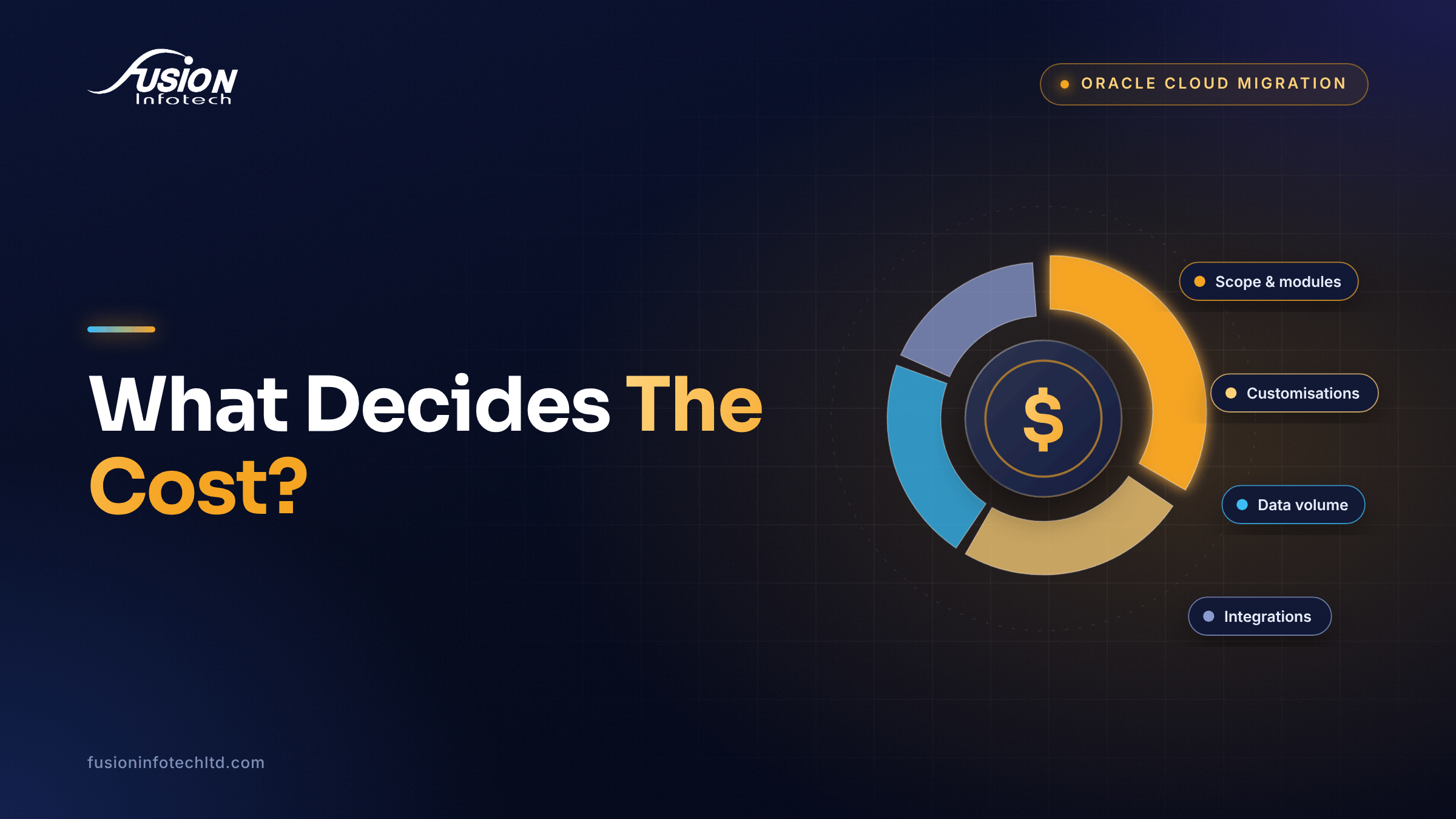
We will not quote a figure here, as any number would be speculative. These are the factors that most influence the final price:
- The number of modules and users required
- The volume of customisation that must be rebuilt
- The quantity of data, and its quality
- The number of external systems to integrate, such as banks or payroll
- Training and post-go-live support
It is also worth noting that cloud operates on an annual subscription model: costs recur each year rather than being paid once. That is not a drawback in itself, but the comparison should be based on total cost over several years, not the first year alone. Our ERP ROI guide outlines a straightforward way to calculate it.
- Replicating the old system exactly. The business pays for a new platform and inherits the old problems.
- Migrating all the data. More data means more cleansing, more testing and more delays.
- Overlooking the users. If no one wants to use the system, the project has failed, however advanced the technology.
- Choosing a poor go-live date. Month-end and year-end are the worst possible windows.
We address these in greater depth in ERP implementation challenges and how to overcome them.
No. EBS 12.2 remains supported. Oracle is simply directing its new features to Fusion Cloud. Consult Oracle's support policy for the latest dates.
Yes. Many companies take a phased approach precisely because it reduces risk.
Generally, no. Core records and open balances are sufficient for most companies, and historical data can be retained in an archive.
No, although it delivers the greatest value to businesses using multiple modules with growing teams. If you are uncertain, our Oracle ERP Bangladesh team can talk it through with you.
Speak with our team. We will review your current EBS environment, give you a candid view on whether a move makes sense now or later, and chart the safest path forward. You can also explore the top Oracle ERP modules to see which are worth migrating first.



© 2026 Fusion Infotech Ltd. All rights reserved.