
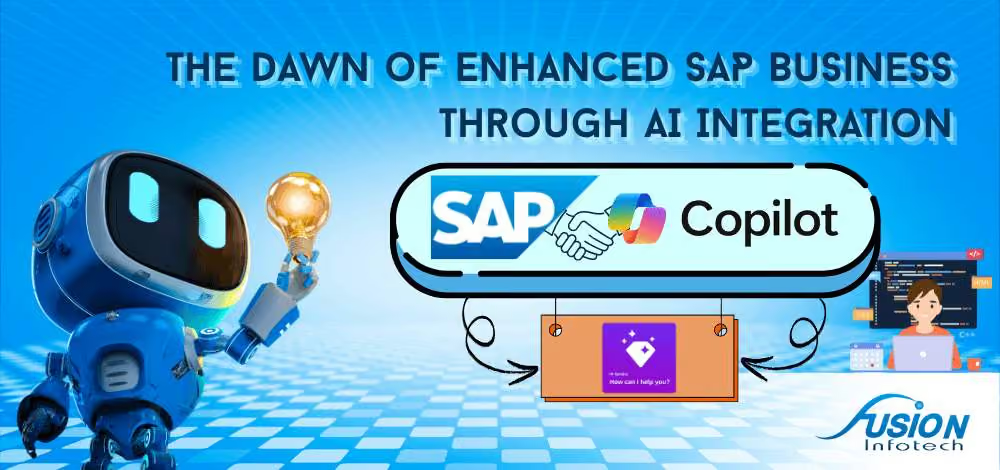
Enterprise technology has crossed a critical threshold. For decades, Enterprise Resource Planning (ERP) platforms served as centralized digital filing cabinets—essential for ledger accuracy and transactional record-keeping, but largely dependent on human input for reporting, forecasting, and process orchestration.
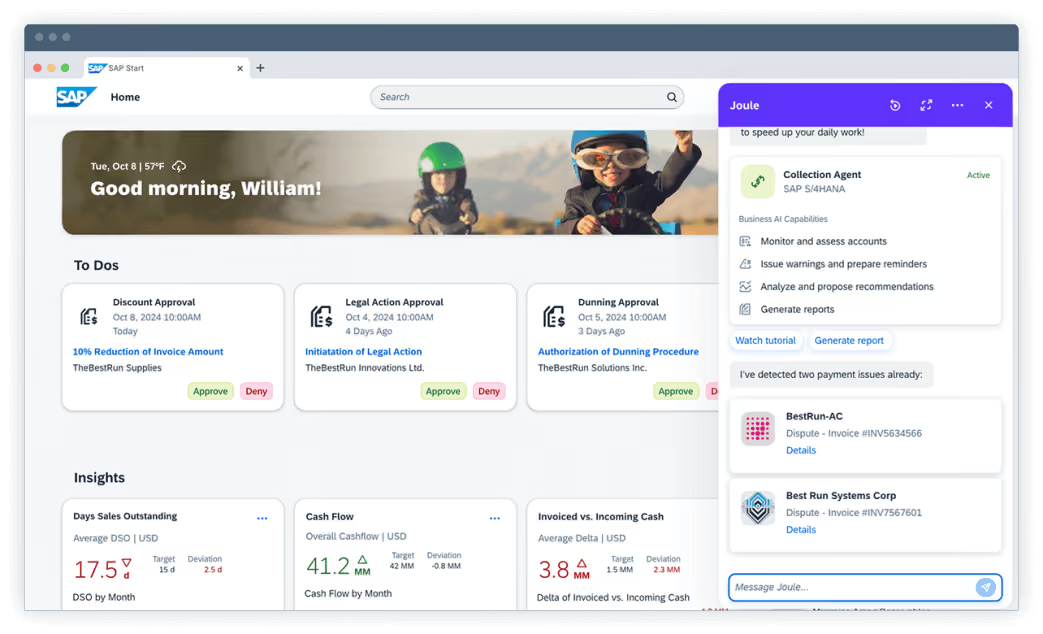
Today, that paradigm has shifted entirely. With the rapid evolution of SAP Business AI and embedded conversational copilots like SAP Joule, business platforms have evolved from passive databases into proactive digital nervous systems. By embedding context-aware artificial intelligence across the core digital stack—including SAP S/4HANA Cloud, SAP SuccessFactors, SAP Ariba, and SAP Customer Experience (CX)—organizations are transforming static administrative tasks into dynamic, automated workflows.
+-----------------------------------------------------------------------------------+
| SAP BUSINESS AI FOUNDATION |
| (Context-Aware, Process-Driven Enterprise Intelligence) |
+-----------------------------------------------------------------------------------+
|
+-------------------------------+-------------------------------+
| | |
v v v
+------------------+ +-------------------+ +-------------------+
| SAP S/4HANA | | SAP SUCCESSFACTORS| | SAP ARIBA |
| (Core ERP & AI) | | (HR & Talent) | | (Procure-to-Pay) |
+------------------+ +-------------------+ +-------------------+
- Predictive Cash Flow - Talent Matching - Anomaly Detection
- Asset Maintenance - Automated Onboarding - Vendor Risk Rules
- Inventory Optimization - Skill Path Analysis - Automated POs
As a premier certified SAP implementation authority and digital transformation consultant in Bangladesh and South Asia, Fusion Infotech helps mid-market enterprises and large conglomerates integrate SAP Business AI into their core operations. Below is a comprehensive analysis of how SAP Business AI operates, its key functional impacts, and how local enterprises can deploy these technologies to achieve sustainable operational growth.
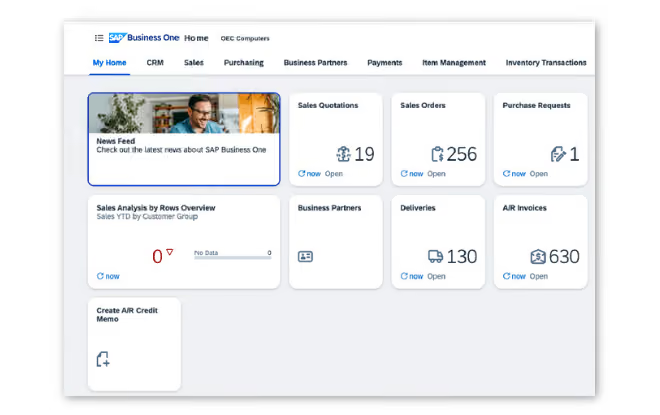
A core architectural advantage of SAP Business AI lies in its native integration across the SAP software suite. Organizations do not need to discard their current IT infrastructure or write fragile API bridges to leverage advanced AI capabilities. Instead, AI functions are infused directly into daily operational interfaces.
+-------------------------------------------------------------------+
|                     SAP BUSINESS AI ARCHITECTURE                  |
+-------------------------------------------------------------------+
  |                  |                   |                  |
  v                  v                   v                  v
+--------------+   +---------------+   +--------------+   +---------------+
| CORE ERP     |   | HUMAN CAPITAL |   | PROCUREMENT  |   | CUSTOMER EXP  |
| (S/4HANA)    |   | (SUCCESSFACTORS)| (ARIBA)        |   | (SAP CX)      |
+--------------+   +---------------+   +--------------+   +---------------+
  - Ledger Recons    - Candidate Recs    - Reorder Rules    - Lead Scoring
  - Asset Health     - Skill Gaps        - Invoice Match    - Churn Risk
Manual data entry, manual document verification, and delayed reporting logs consume significant administrative bandwidth. By delegating high-volume, repetitive tasks to autonomous AI agents, enterprise staff can focus on strategic planning and revenue generation.
Financial teams often spend days reconciliating month-end ledgers and clearing billing discrepancies. With SAP Business AI, localized financial data can be queried using natural language prompts. AI engines detect duplicate billing errors, explain complex fixed asset depreciation calculations, and generate natural-language cash flow summaries in seconds.
Supply chain volatility requires constant operational awareness. Embedded AI algorithms evaluate historical shipping logs, supplier lead times, and warehouse stock levels to forecast demand accurately. In Maintenance, Repair, and Operations (MRO) inventory analysis, AI tools translate complex statistical runs into actionable summaries, helping inventory planners reduce analysis times significantly.
On the factory floor, sensor telemetry streams directly into the ERP. Predictive AI models monitor machine temperature, vibration, and runtime hours to detect operational anomalies, scheduling maintenance before equipment failures disrupt production schedules.
For corporate boards and Chief Information Officers (CIOs), security is a primary concern when evaluating AI adoption. Generic, public AI models often present data privacy risks, potential intellectual property leaks, and unpredictable outputs ("hallucinations").
SAP addresses these risks through its Clean Core and AI Foundation governance framework. Enterprise data remains strictly protected within tenant boundaries, ensuring customer records and financial logs are never used to train public models.
+------------------------------------------------------------------+
| ENTERPRISE AI GOVERNANCE & SECURITY |
+------------------------------------------------------------------+
- Role-Based Access Security (RBAC)
- End-to-End Data Encryption
- Immutable Audit Logging
- Localized Tax & Statutory Compliance (NBR / Local Labor Laws)
- Strict Data Boundary Isolation (Zero Public LLM Leaks)
By maintaining immutable audit logs and clear citation tracking, SAP Business AI provides executive leadership with complete transparency regarding how AI-driven decisions are generated. When implemented by Fusion Infotech, these AI models are configured to adhere strictly to regional statutory standards, including Bangladesh's National Board of Revenue (NBR) tax reporting and local labor regulations.
Adopting SAP Business AI goes beyond software configuration—it transforms organizational culture. When administrative bottlenecks are removed, employees shift from reactive firefighters to proactive strategists.
+--------------------------------------------------------------------+
| TRADITIONAL vs AI-AUGMENTED ENTERPRISE |
+--------------------------------------------------------------------+
| TRADITIONAL WORKFLOWS | AI-AUGMENTED WORKFLOWS |
| • Manual Data Entry | • Automated OCR Capture |
| • Batch Reporting Lags | • Real-Time Natural Language Q&A |
| • Reactive Equipment Fixes | • Predictive IoT Maintenance |
| • Static Excel Forecasting | • AI-Driven Demand Planning |
+--------------------------------------------------------------------+
By equipping workforce teams with conversational tools like SAP Joule, companies build an environment of continuous experimentation and speed. Employees can query operational data, draft contracts, and run complex process simulations without waiting for dedicated IT support tickets.
Deploying enterprise-grade AI requires deep architectural experience, precise database mapping, and localized implementation capabilities. Fusion Infotech stands as a trusted digital transformation authority and certified SAP partner in Bangladesh, maintaining a zero-project-failure track record across diverse industrial verticals.
+-------------------------------------------------------------------+
|                     FUSION INFOTECH ECOSYSTEM                     |
+-------------------------------------------------------------------+
  |                  |                   |                  |
  v                  v                   v                  v
+--------------+   +---------------+   +--------------+   +---------------+
| SAP ENTERPRISE|  | FUSION ROBUST |   | WORKEDIN     |   | SOURCECORE    |
| SOLUTIONS    |   | CLOUD ERP     |   | HRMS         |   | P2P PLATFORM  |
+--------------+   +---------------+   +--------------+   +---------------+
  - S/4HANA Cloud    - Agile Cloud       - NBR Payroll      - Procure-to-Pay
  - SAP Business 1   - Multi-Currency    - Attendance       - Vendor Scoring
  - SAP BTP & AI     - Rapid Deployment  - Mobile Access    - Anomaly Audit
SAP Business AI is an integrated suite of artificial intelligence, machine learning, and conversational tools (like SAP Joule) embedded directly into SAP cloud applications. It automates processes, predicts business outcomes, and optimizes decision-making across finance, supply chain, and HR workflows.
Unlike generic AI tools, SAP Business AI is context-aware. It operates securely on an organization's specific ERP data models, business logic, and process context, delivering high-accuracy outcomes compliant with enterprise governance standards.
Yes. Growing SMBs can access AI-driven features through SAP Business One or cloud deployments managed by Fusion Infotech. Additionally, agile platforms like Fusion Robust provide localized automated workflows for mid-tier organizations.
Fusion Infotech configures secure cloud architectures that enforce strict Role-Based Access Control (RBAC), end-to-end data encryption, and full compliance with Bangladesh's NBR tax structures and international security standards.
The era of treating enterprise ERP systems as passive transaction logs is over. Migrating to an AI-powered enterprise architecture, where predictive algorithms anticipate market shifts, automate administrative overhead, and optimize global supply chains—delivers the agility needed to maintain market leadership.
Executing a successful AI transformation requires proven technical expertise, robust architectural design, and localized operational knowledge. Fusion Infotech provides the certified SAP consultants, custom product ecosystems, and ongoing technical support necessary to maximize your enterprise technology investment.
Ready to modernize your business processes and harness the power of SAP Business AI? Contact the enterprise architects at Fusion Infotech today to schedule your strategic blueprinting session!
SAP Business AI Platform Keynote this video provides an executive overview from SAP's leadership on how SAP Business AI connects ERP process context, domain knowledge, and AI agents to transform core enterprise operations.


.svg)
© 2026 Fusion Infotech Ltd. All rights reserved.





.avif)
